Founded in 1966, New African is one of the leading pan-African magazines, widely recognized for its in-depth analysis of the continent’s political, economic, social and cultural dynamics. Published in London and distributed internationally, it has, for nearly six decades, established itself as an independent and influential voice, read by African decision-makers, international institutions, academic circles and the African diaspora.
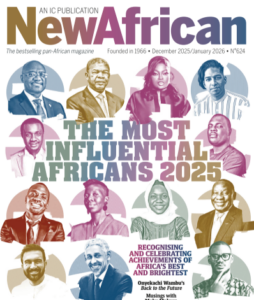
Among its flagship initiatives is the annual list of the 100 Most Influential Africans (MIA), which has become a continental and global reference. This selection highlights women and men whose actions, ideas and leadership have a tangible and lasting impact on Africa and beyond, across key sectors such as governance, finance, environment, science, culture and international diplomacy.
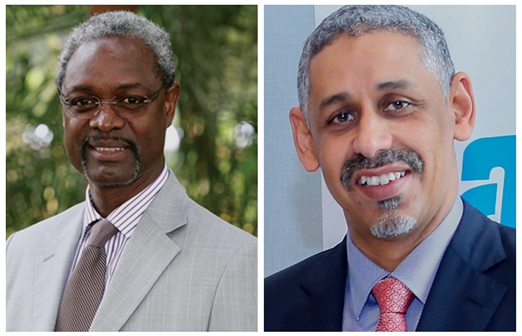
The 2025 edition is of particular significance for Mauritania, with the nomination of two of its nationals, Ibrahim Thiaw and Dr Sidi Ould Tah, among Africa’s most influential personalities of the year.
Mauritania: From the Margins to Strategic Influence
This dual recognition sends a strong signal for Mauritania. It reflects the emergence of national leadership capable of exerting influence at the highest levels of multilateral and international financial institutions, and of contributing actively to the formulation of global responses to today’s major challenges.
Ibrahim Thiaw and Sidi Ould Tah embody two essential pillars of Africa’s future: global environmental governance and the transformation of development finance. Their respective trajectories illustrate the rise of Mauritanian expertise now fully integrated into international decision-making circles.
Ibrahim Thiaw: An African Career at the Heart of Global Environmental Governance
A former Executive Secretary of the United Nations Convention to Combat Desertification (UNCCD), Ibrahim Thiaw has held one of the most strategic positions within the international environmental architecture. In this role, he contributed to repositioning the fight against desertification, land degradation and drought as global challenges, closely linked to climate change, food security, migration and geopolitical stability.
Prior to leading the UNCCD, he served as United Nations Assistant Secretary-General (ASG) and Deputy Executive Director of the United Nations Environment Programme (UNEP). In these capacities, he played a central role in shaping the strategic direction of the UN system’s environmental action.
He was subsequently appointed Special Adviser to the United Nations Secretary-General for the Sahel, a highly strategic function aimed at coordinating international action in a region facing multidimensional challenges, including climate change, ecosystem degradation, security, development and social cohesion.
His career also includes senior responsibilities within the International Union for Conservation of Nature (IUCN), where he contributed to strengthening the link between biodiversity, public policy and sustainable development. This exceptional trajectory, at the intersection of environment, development and diplomacy, fully explains his recognition among Africa’s most influential figures in 2025.
Sidi Ould Tah: From National Public Service to the Reform of African Development Finance
Dr Sidi Ould Tah represents another central dimension of contemporary African influence: development finance, grounded in a strong articulation between national experience and multilateral leadership.
He served as Minister of Economic Affairs and Development of Mauritania for nearly ten years, during which he played a decisive role in designing and implementing the country’s macroeconomic, development and international cooperation policies.
Following this extended ministerial tenure, he was appointed President of the Arab Bank for Economic Development in Africa (BADEA), a position he held for approximately a decade. Under his leadership, BADEA underwent significant modernization, strengthening its role in financing infrastructure, trade and productive development across Africa.
As President of the African Development Bank (AfDB), Sidi Ould Tah now promotes a strategic vision centred on the mobilization of large-scale resources, the leveraging of private capital and the strengthening of African ownership of development pathways. In a context marked by shrinking public aid and growing climate- and demography-related financing needs, this approach has earned him growing continental and international recognition, culminating in his inclusion in the MIA 2025 list.
Continental and Global Significance
Beyond Mauritania, the simultaneous recognition of these two figures illustrates a profound evolution in African leadership. Influence today is exercised less through formal authority than through the capacity to build strong institutions, engage in international negotiation and shape global norms and priorities.
At the global level, this dual nomination contributes to dismantling reductive narratives portraying Africa as peripheral. It highlights a continent whose leaders actively participate in the management of global public goods: climate action, financial stability, food security and resilience.
Why the Most Influential Africans List Matters
As New African emphasizes, the 100 Most Influential Africans list plays a structuring role in valuing African achievements. It provides inspiring role models, strengthens collective confidence and offers a credible counter-narrative to persistent negative perceptions of the continent.
The presence of two Mauritanians in the 2025 edition therefore goes well beyond individual recognition. It confirms the rise of African influence grounded in competence, institutions and global engagement. Through Ibrahim Thiaw and Sidi Ould Tah, Mauritania asserts its capacity to contribute meaningfully to the construction of sustainable solutions, in the service of Africa and the wider international community.
A.D.

Diffusion partielle ou totale interdite sans la mention : Source www.kassataya.com
-
-
-

-